Gaza – Public Relations
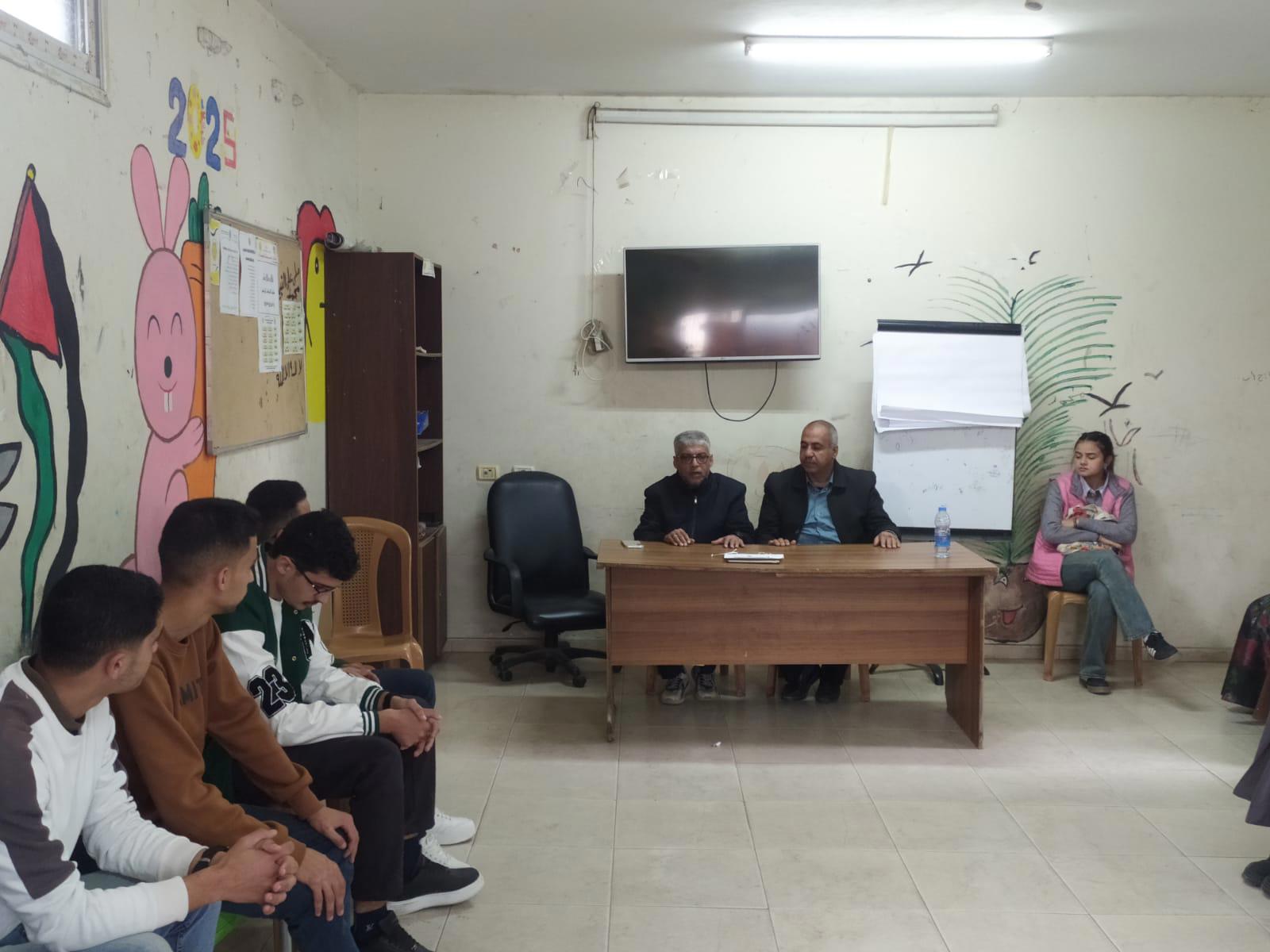
On Monday morning, February 9, 2026, Israa University – Palestine held an in-person meeting for basic-stage medical students (Biomedical Sciences stage) at the Nuseirat Services Club Hall. The event was attended by Prof. Nahidh Hijazi, Vice President for Academic Affairs, Dr. Abdul Fattah Qarman, Dean of Scientific Research and Libraries, and several faculty members from the College of Medicine.
Prof. Hijazi opened the meeting with a comprehensive explanation of the university’s future policy, which is based on adopting blended learning by combining online education with face-to-face classes. This approach aims to ensure continuity and flexibility in the educational process and enhance the quality of learning outcomes—especially in medical disciplines that require a precise balance between theoretical and practical components.
During the meeting, the university emphasized its commitment to developing facilities dedicated to practical education and clinical training to meet the needs of medical students. This includes strengthening the connection between the biomedical sciences stage and subsequent clinical stages in accordance with approved academic standards.
For his part, Prof. Suhail Al-Madbak, Dean of the College of Medicine, stressed that the college places special attention on students in the basic stage, as it represents the solid scientific foundation of their academic and medical journey. He noted that the college operates under a clear vision aimed at providing high-quality medical education that integrates modern knowledge with proper practical training.
He added that the College of Medicine strives to prepare students with a strong foundation in biomedical sciences, capable of keeping pace with global scientific developments and transitioning confidently and competently into clinical stages—ultimately contributing positively to the Palestinian community and the healthcare sector in the future.
The meeting also addressed the university’s plans to strengthen international cooperation with external academic and medical institutions, offering distinctive educational and training opportunities for medical students, along with academic and moral support amid ongoing challenges.
The university reaffirmed the importance of promoting medical education in Palestine as a key pillar for supporting the health sector and compensating for the decline witnessed in previous periods, while moving toward a more stable and higher-quality educational phase that contributes to building medical competencies capable of serving Palestinian society.
The meeting concluded with an academic lecture for basic-stage medical students (Biomedical Sciences stage), as part of the university’s approach to integrating academic advising with scientific content, enhancing direct interaction with students, and responding to their inquiries.