Al-Isra University Discusses Master’s Thesis on the Role of Crisis Management in Improving Food Security in Southern Palestinian Governorates
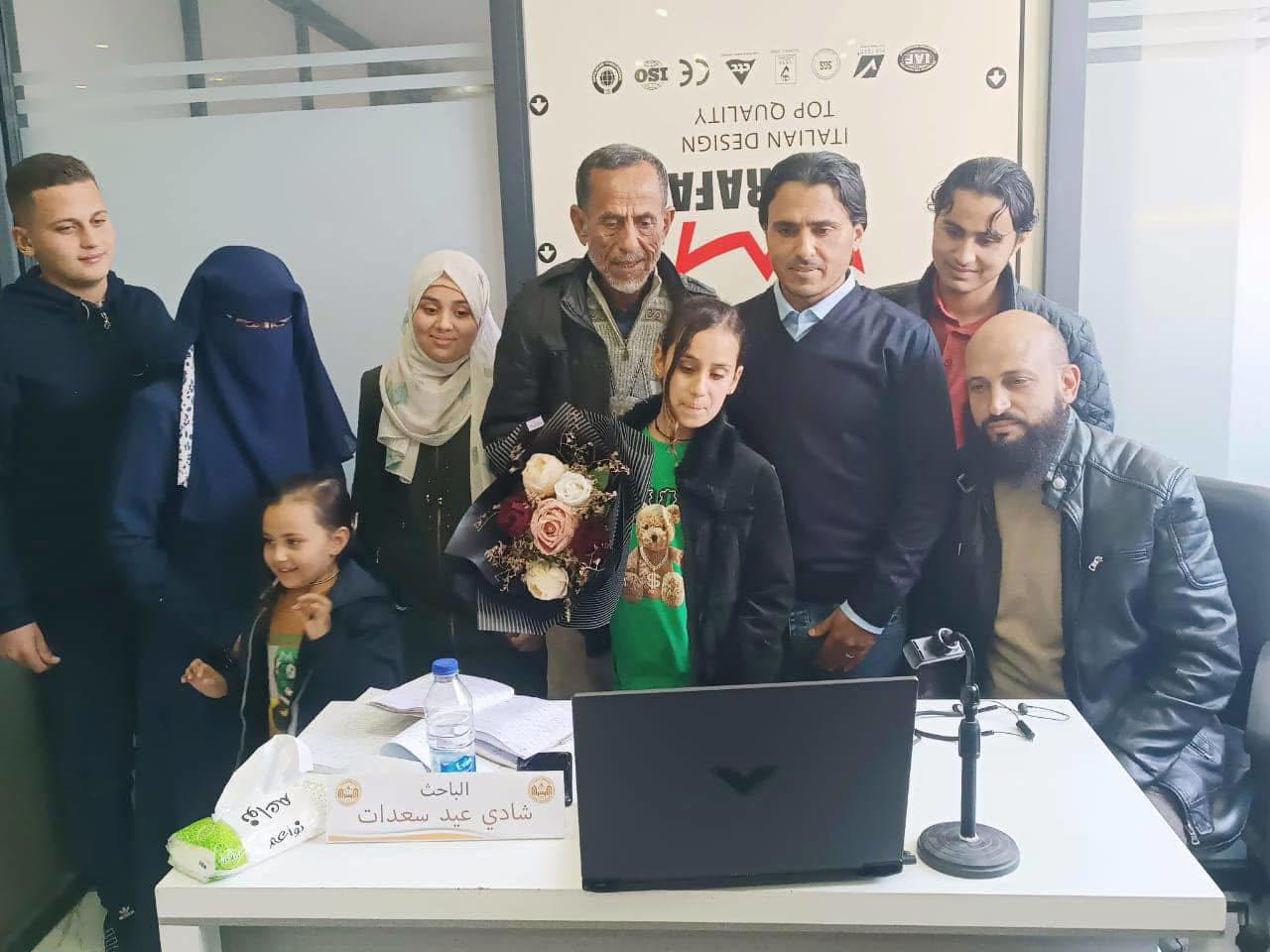
On the evening of Wednesday, December 18, 2024, Al-Isra University discussed a Master’s thesis by researcher Shadi Eid Saadat titled: "The Role of Crisis Management in Improving Food Security in Southern Palestinian Governorates." The study focused on identifying the roles that crisis management can play in enhancing food security in the southern regions of Palestine, using an analytical descriptive approach. The discussion was attended by Dr. Nahid Hijazi, Dean of Graduate Studies at the university, Dr. Munia Mazid, Dean of Scientific Research, and Dr. Ahmed Al-Hassaina, Dean of the Faculty of Administrative and Financial Sciences. The thesis committee, which convened electronically via Zoom, consisted of: Dr. Nabil Abu Shamala (Supervisor and Chair) Dr. Mahmoud Al-Shanti (Internal Examiner) Dr. Marwan Al-Agha (External Examiner, from the Arab Republic of Egypt) The discussion took place in a distinguished academic atmosphere, where the researcher presented the details of his study despite the dire conditions in the Gaza Strip, particularly amid the ongoing aggression and genocide against the Palestinian people. Key Findings of the Study The study examined the role of crisis management dimensions—mitigation, preparedness, response, and recovery—in improving food security. The researcher relied on structured interviews with ten experts in crisis management and food security, as well as a focus group of six specialists. The study concluded that these dimensions play a significant and influential role in enhancing food security, which suffers from high rates of scarcity in the southern governorates. Main Challenges The findings revealed that while most relevant institutions have strategic plans for crisis management related to food security—developed in coordination with stakeholders—several obstacles hinder their implementation, including: Lack of funding Shortage of qualified personnel Scarce financial resources affected by political decisions Overlapping jurisdictions among different ministries Key Recommendations The study proposed a set of critical recommendations to strengthen food security in southern Palestine, including: Expanding agricultural land and improving productivity Utilizing non-traditional water sources, such as treated and recycled wastewater, given the availability of sewage treatment plants. Enhancing self-sufficiency and encouraging traders to stockpile sufficient quantities of essential goods. Establishing a national fund to support the agricultural and industrial sectors, enabling them to withstand crises, including wars and climate change. Providing tax exemptions to alleviate the burden on the agricultural and industrial sectors. Adopting import substitution policies and promoting food sovereignty to support local farmers, encourage reliance on domestic resources, and enhance resilience against crises. Conclusion At the end of the discussion, the committee praised the researcher’s efforts and his in-depth study, which sheds light on a critical issue. They emphasized the importance of implementing the proposed recommendations to strengthen food security and ensure its sustainability in Palestine.