Gaza – Public Relations
Al-Israa University in Palestine and the United Nations Educational, Scientific and Cultural Organization (UNESCO) discussed ways to strengthen joint cooperation in support of the higher education sector and contribute to recovery and reconstruction efforts in the Gaza Strip.
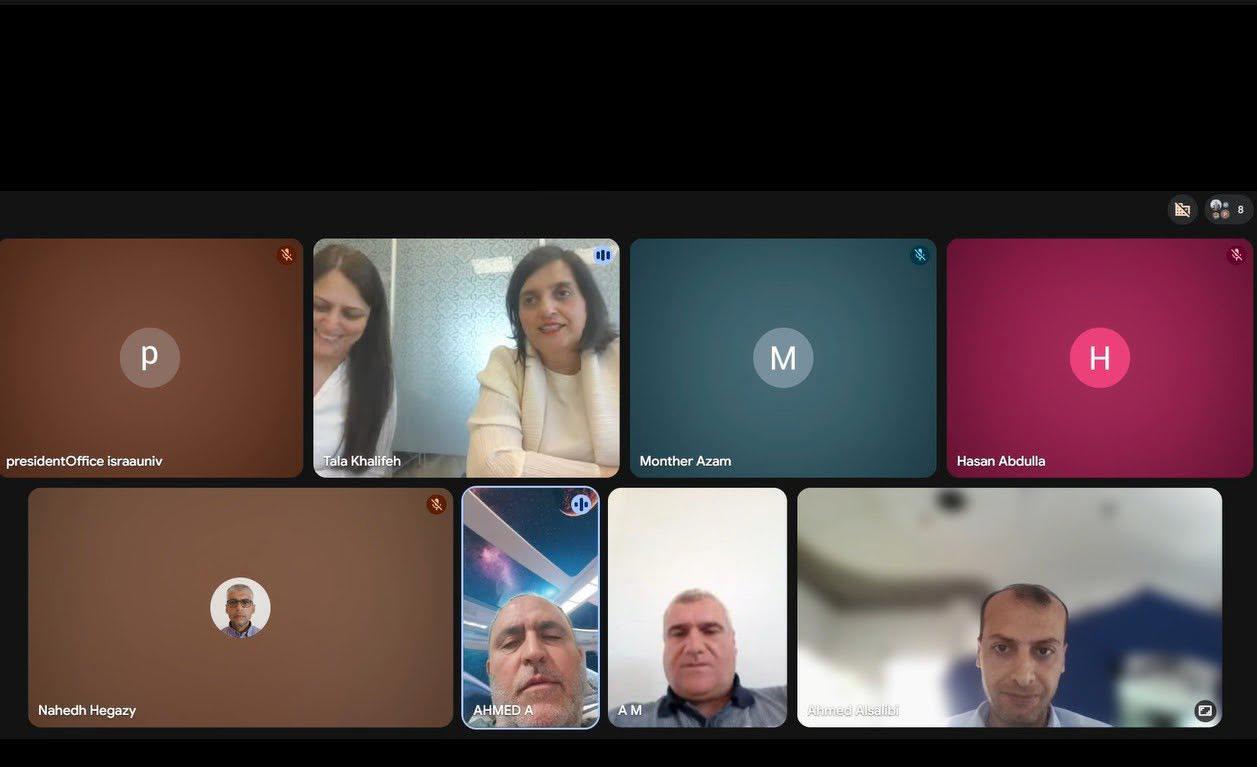
The discussion took place during a meeting held via Zoom, attended by Prof. Dr. Alaa Matar, President of Al-Israa University; Dr. Nahed Hijazi, Vice President for Academic Affairs; Dr. Ahmad Al-Hassaina, Vice President for External Affairs; and Dr. Ahmad Al-Sulaibi, Dean of the Faculty of Engineering and Information Technology.
Representing UNESCO were Ms. Sarah Al-Attar, Head of the Education Unit, and Ms. Tala Khalifa, Education Project Officer at the UNESCO Palestine Office.
During the meeting, the University President presented an overview of Al-Israa University and its academic programs, explaining that the university offers a range of diploma, bachelor's, and master's degree programs across seven faculties, in addition to the Deanship of Graduate Studies, the Deanship of Scientific Research and Libraries, and several academic and administrative units that support the educational process and promote academic excellence.
The participants also discussed the extensive damage sustained by the university as a result of the recent war in the Gaza Strip, which led to widespread destruction of buildings, facilities, laboratories, and educational infrastructure, as well as the destruction of the university's teaching hospital. This has had a significant impact on the educational and healthcare services provided by the institution.
University representatives emphasized that, despite the scale of the challenges, Al-Israa University continues its efforts to ensure the continuity of the educational process and to support students and academic staff. The university is also working to build effective partnerships with international institutions and organizations to promote the sustainability of higher education and strengthen its capacity for recovery and renewal.
The two sides discussed future opportunities for cooperation and mechanisms to support higher education in Gaza, including the rehabilitation of affected educational institutions, the provision of a suitable learning environment for students, and the implementation of joint initiatives and projects that support academic recovery and the development of the education sector.
At the conclusion of the meeting, both parties stressed the importance of maintaining communication and coordination in support of the higher education sector, strengthening the resilience of Palestinian academic institutions, and enhancing their role in serving society and promoting development.